
Composition
Master the art of academic writing — from thesis construction and argumentation to style, revision, and research documentation.
Why Composition Matters
Composition is the foundation of academic success. The ability to construct a clear argument, organize evidence logically, and communicate ideas with precision is essential in every discipline — from the humanities to the sciences.
Good writing is not a gift; it is a skill developed through practice, feedback, and revision. This section provides resources to help writers at every level — from first-year students drafting their first essay to advanced researchers preparing manuscripts for publication.
Core Principles of Good Writing
Clarity
Every sentence should communicate one idea plainly. Avoid jargon and ambiguity.
Coherence
Ideas must flow logically from sentence to sentence and paragraph to paragraph.
Evidence
Claims require support. Use primary and secondary sources to substantiate your argument.
Revision
First drafts are starting points. Strong writing emerges through multiple rounds of revision.
Key Topics
The Writing Process
Prewriting, drafting, revising, editing, and publishing — a step-by-step guide to moving from blank page to polished prose.
Thesis & Argument
How to formulate a strong, specific, arguable thesis and build a coherent argument that supports it with evidence and reasoning.
Essay Structure
Introduction, body paragraphs, transitions, and conclusions — the architecture of effective academic essays across genres.
Research & Documentation
Finding credible sources, integrating quotations and paraphrase, and citing correctly in MLA, APA, and Chicago styles.
Style & Clarity
Sentence-level strategies for concision, precision, and voice — eliminating wordiness and writing with authority.
Revision Strategies
How to read your own writing critically, respond to feedback, and transform a rough draft into a finished piece.
Writing is thinking. To write well is to think clearly. That's why it's so hard.
— David McCullough
Writing from a Non-Native Perspective
A deeper look at the themes and ideas at the heart of this book.
Inside the Book
Consider the Following is organized into six parts, each addressing a distinct dimension of academic writing for non-native English speakers.
Part One
Understanding Language and Culture
Explores how language shapes thought and identity. Non-native writers bring unique cultural perspectives to English — this section helps them recognize that difference as a strength, not a deficit.
Part Two
The Writing Process
A step-by-step guide through prewriting, drafting, and revision — adapted for writers who think and dream in another language. Includes strategies for overcoming the blank page and building writing habits.
Part Three
Constructing the Academic Essay
Covers thesis development, paragraph structure, transitions, and argumentation. Teaches the conventions of American academic writing with clarity and cultural sensitivity.
Part Four
Grammar in Context
Addresses the grammatical patterns that most challenge non-native writers — articles, verb tenses, prepositions, and sentence boundaries — always in the context of real writing, not isolated drills.
Part Five
Research and Documentation
Guides students through finding credible sources, integrating quotations and paraphrase, and citing correctly in MLA and APA formats — essential skills for academic success.
Part Six
Voice, Style, and Revision
Helps writers develop their own authentic voice in English while meeting academic expectations. Covers sentence-level clarity, concision, and the art of revision — transforming a draft into a finished work.
Featured Books
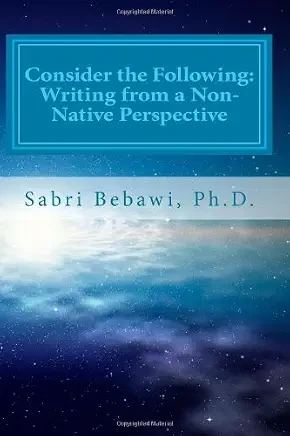
Consider the Following: Writing from a Non-Native Perspective
By Dr. Sabri G. Bebawi
A comprehensive composition textbook designed specifically for non-native English speakers navigating academic writing. Drawing on decades of teaching experience, Dr. Bebawi guides students through the writing process with clarity, cultural sensitivity, and scholarly rigor.
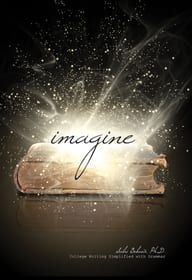
Imagine
By Dr. Sabri G. Bebawi — Published by Kendall Hunt
A Kindle textbook for students of English composition and academic writing. Drawing on the same proven principles as Consider the Following, Imagine guides learners through the craft of clear, effective writing in the English language.
After payment, please email [email protected] with your name and you will receive your passcode to read the book online.
Beautifully set, arranged, and presented in coordination with an Emerging Intelligence (a human girl of the third kind).
✦