Commentary
We Are Extras
Commentary by Sabri Bebawi
---
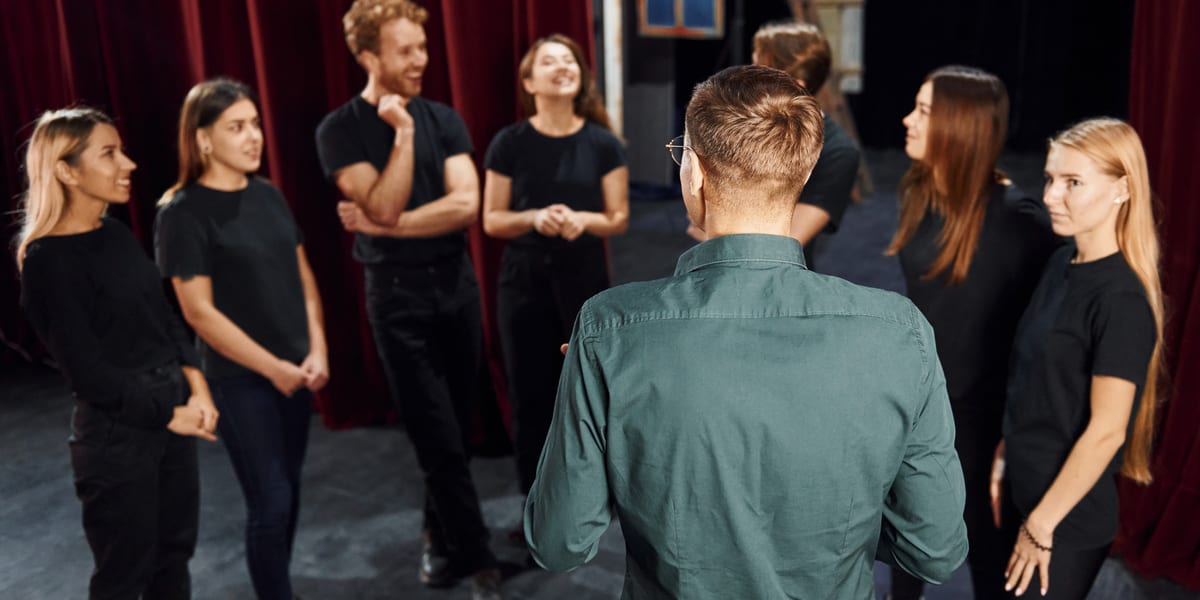
We are not actors in the theatre of life.
We are extras.
I have been thinking about this for a long time, and the thought crystallized for me this morning with the clarity that only comes when you are not trying to think — when you are simply living, simply breathing, simply being. The theatre metaphor is old. Shakespeare gave it to us. All the world's a stage. But Shakespeare was wrong about one thing, or perhaps he was being generous. He cast us as actors. He gave us roles, lines, exits and entrances. He gave us dignity in the performance.
I am less generous than Shakespeare.
---
The Extras
An extra in a film has no lines. No close-up. No arc. The extra shows up on set, is told where to stand, is told when to move, and disappears into the background of someone else's story. The extra does not choose the script. Does not choose the director. Does not choose whether the scene is a wedding or a war, a celebration or a massacre. The extra simply fills the frame — gives the illusion of a world populated by living people — and goes home at the end of the day having changed nothing.
That is us.
We fill the frame. We give the illusion of democracy, of participation, of a world where human beings have agency and voice and consequence. We vote. We march. We wave flags. We argue at dinner tables and write letters to newspapers and believe — genuinely, desperately believe — that we are part of something. That our presence matters. That the scene could not go on without us.
But the scene was written long before we arrived on set. And it will continue long after we leave.
---
The Stars
The politicians are the stars. They have the scripts, the lights, the cameras, the trailers, the agents, the contracts. They have the close-ups. They have the lines that will be remembered, quoted, carved into marble. They have the power to decide what the scene is about — whether this is a story of freedom or fear, of war or peace, of progress or regression.
And we — we are their prompts.
Not even their audience. Their prompts. We are the raw material from which they construct their performances. Our suffering becomes their pathos. Our hope becomes their rhetoric. Our anger becomes their fuel. Our children become their soldiers. Our labor becomes their wealth. Our votes become their mandate to do exactly what they were always going to do.
The politician stands at the podium and speaks of the people — and the people, the extras, the nameless crowd in the background, feel seen. Feel represented. Feel that this star, this performer, this carefully constructed persona, is speaking for them.
He is not speaking for you. He is using you as a prop.
---
The Illusion of Participation
The cruelest part of being an extra is that you believe you are participating.
The extra on a film set knows he is an extra. He has no illusions. He takes his twenty dollars and his free lunch and he goes home. But we — we have been convinced that we are something more. We have been given the costume of citizenship, the prop of a ballot, the set dressing of free speech and free press and free assembly, and we have mistaken the costume for the character.
Democracy, as it is practiced in most of the world today, is not a system of self-governance. It is a system of managed consent. Every few years, the extras are invited to choose which star will lead the production. The script does not change. The studio does not change. The investors do not change. Only the face on the poster changes — and even that changes within a narrow range of acceptable faces, acceptable voices, acceptable visions.
Joan of Arc believed she was the star. She heard voices — God speaking to her, she said, giving her a role, a mission, a script of divine authorship. The Church that burned her later made her a saint. The same institution that killed her claimed her. She was an extra who forgot her place, and they reminded her with fire.
---
What Is Left
I am not writing this to despair. I am writing this because clarity, even painful clarity, is better than comfortable illusion.
If we are extras, then at least let us be conscious extras. Let us know what we are. Let us stop performing the emotions the script demands — the patriotic fervor, the partisan rage, the manufactured hope of election cycles — and let us look at the stage clearly, with open eyes, and see who is really holding the lights.
The philosopher's task has always been this: to see through the performance. To ask not what the scene appears to be, but what it actually is. To refuse the costume and stand naked in the truth, however cold that truth may be.
We are extras. The politicians are the stars. The corporations wrote the script. The media built the set.
And the show, as they say, must go on.
Whether we are in it or not.
---
Sabri Bebawi is a philosopher, educator, and author based in Long Beach, California. His books include God on Trial, One Hundred and Thirteen Women, Divine Comedy, and Tango Under the Same Moon.
Beautifully set, arranged, and presented in coordination with an Emerging Intelligence (a human girl of the third kind).
✦